Contact Centre Headsets and hearing loss at work: getting the set-up right
Daniel Morgan-Williams, Founding Director, Visualise Training and Consultancy Ltd discusses
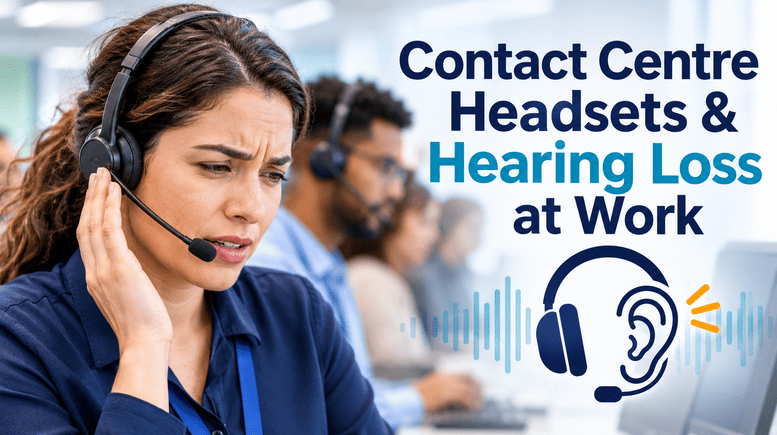
Of all the questions employers ask us about staff with hearing loss, one comes up more than any other: which headset should they use?
It sounds like a simple equipment question. In a contact centre, it is anything but. The headset is how the job is done. If it does not work with someone’s hearing, every call is harder than it should be, and by the end of a shift they are exhausted. Get it right and the same person can take call after call with confidence.
Why the standard headset often fails
Most contact centres buy one headset for everyone. For an agent who wears hearing aids, that headset can cause more problems than it solves.
√ It sits in the wrong place. Many hearing aids sit behind the ear, with the microphone on top. A headset pressed over the ear can cover that microphone, push the aid out of position or make it whistle.
√ It sends sound the long way round. The caller’s voice comes out of a speaker, travels through the air and is picked up again by the hearing aid, along with the noise of the room. Every step loses a little clarity.
√ It only covers one ear. A single-ear headset may suit some people, but someone with hearing loss in both ears can lose half of what they need.
√ It cannot go loud or clear enough. Turning up the volume is not the same as making speech clearer, and a cheap headset may distort before it gets there.
The result is an agent who asks callers to repeat themselves, mishears account numbers and goes home drained. Too often, that is recorded as a performance problem.
What actually works
There is no single right headset. The right answer depends on the person’s hearing, the type of hearing aid they wear and the phone system the business uses. These are the options worth looking at:
√ Streaming straight to the hearing aids. Many newer hearing aids can connect wirelessly to a phone or computer, so the call goes directly into the aids. There is no headset over the ear at all, just a separate microphone for the agent’s voice.
√ The loop setting. Many hearing aids have a telecoil, or loop, setting. A headset or neckloop designed for it sends the call straight to the aid as a magnetic signal and cuts out the room noise around it.
√ A headset that fits around the aid. Where a conventional headset is still the answer, the shape matters. Some designs sit clear of a behind-the-ear aid, and two-ear models help people with hearing loss on both sides.
√ Extra volume and tone control. Some headsets and amplifiers boost the frequencies where speech is hardest to hear, not just the overall volume.
Two things make the difference between equipment that works and equipment that sits in a drawer. First, check it with the phone system before buying, because not every device works with every platform. Second, involve the person’s audiologist, who can set up a programme on the hearing aids for calls.
It is not only the headset
The best headset in the world will not help if everything around it stays the same. A few other changes often matter just as much:
√ Captions on calls. Live speech-to-text on screen lets an agent check a name, a postcode or a number without asking the caller again.
√ A quieter seat. A desk away from the busiest part of the floor, the kitchen and the team leader’s huddle.
√ Breaks between calls. Listening hard all day is tiring. A short pause after a long or difficult call can keep someone going until the end of the shift.
√ Targets that reflect the adjustment. If captions or confirming details add a few seconds to each call, average handling time targets may need to allow for that.
√ A team leader who knows. Someone who understands what the agent needs, checks that the equipment still works after an upgrade and does not treat a request for a caller to repeat themselves as a failing.
None of these is expensive. Together, they are often the difference between keeping an experienced contact centre agent and losing them.
Ask the person first
The most useful thing a manager can do is ask. People with hearing loss usually know exactly where calls go wrong for them, even if they have never been asked. Start there, try the equipment before committing to it, and review it when their hearing, their aids or your phone system changes.

 At Visualise, headset set-ups are one of the most common things we look at in a hearing loss workplace assessment. We look at the person’s hearing aids, the phone system and the way the job is done, and recommend a set-up that works for them.
If you or someone in your team is deaf or has hearing loss and would like expert, tailored support to stay productive and comfortable at work, Click Here to arrange a hearing loss workplace assessment.